Tell your friends about this item:
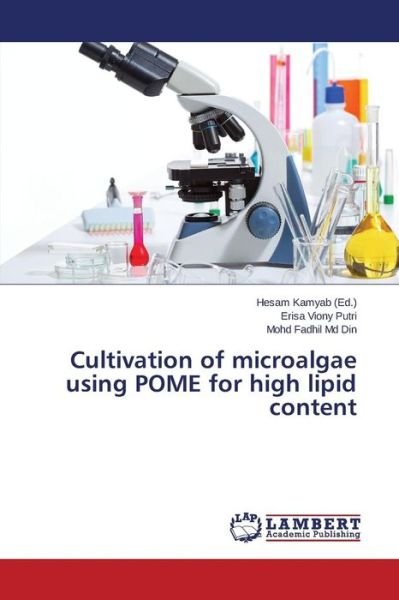
Cultivation of Microalgae Using Pome for High Lipid Content Md Din Mohd Fadhil
Ordered from remote warehouse
Our customers say:


Cultivation of Microalgae Using Pome for High Lipid Content
Md Din Mohd Fadhil
Publisher Marketing: Microalgae are reported as the potential resources to produce lipid from their biomass cell. Lipid is generally a group of organic compound that important as primary biofuel raw material, and also as component for foods, cosmetic products, fertilizers, animal feed, etc. As the resources of lipid production from synthetic media are costly, therefore the derivation of cheap sources from waste is useful in massive scale. Hence, the study is emphasized on the effectiveness of industrial wastewater such as palm oil mill effluent (POME) as main carbon source to maintain the growth of microalgae and simultaneously increase the lipid content. Furthermore, investigation of five selected strains of green microalgae are applied namely Chlorella vulgaris (Korean Collection for Type Cultures (KCTC) Biological Resource Center (BRC)), Chlorella pyrenoidosa (POME), Chlorella sorokiniana (UTEX 1602), Botryococcus sudeticus (UTEX 2629), and Tetraselmis sp (UTEX 2767). The study demonstrated that Chlorella sorokiniana, is the predominant species for specific growth rate ( ), biomass productivity and lipid content in diluted POME with the value 0.099/day, 8.0 mg/L.day, 2.68 mg lipid/mg Cell Dry Weight."
| Media | Books Paperback Book (Book with soft cover and glued back) |
| Released | June 18, 2015 |
| ISBN13 | 9783659743481 |
| Publishers | LAP Lambert Academic Publishing |
| Pages | 156 |
| Dimensions | 152 × 229 × 9 mm · 250 g |
| Language | German |