Tell your friends about this item:
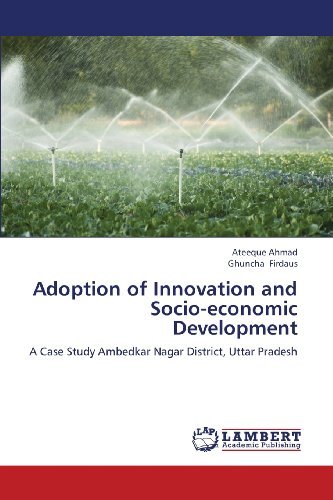
Adoption of Innovation and Socio-economic Development: a Case Study Ambedkar Nagar District, Uttar Pradesh Ghuncha Firdaus
Our customers say:


Adoption of Innovation and Socio-economic Development: a Case Study Ambedkar Nagar District, Uttar Pradesh
Ghuncha Firdaus
Growing surplus food grains by devoting higher percentage share of cultivated area under food grains crops has become unsuccessful because of self-sufficiency at regional and national level as well. Per head per day availability of food grains in the country is 417 gm., which is sufficient to satisfy the hungers. The misery is that the people continue to starve because the primary problem is not the lack of an adequate supply of food grains but the incapacity to purchase it. Supply oriented food availability offer at best a partial solution. The most difficult aspect is how to ensure peoples? entitlement to adequate food intake from the existing land resources to sustain their livelihood. It is increasingly felt that Indian agriculture is currently suffering from ?technology fatigue?, due to which the earlier gains made during the Green Revolution has withered away. Moreover, Green Revolution itself has been criticized for being Euro-centric, environmentally unsustainable and being a political (it never addressed the issues of land and tenancy reforms, and other related institutional reforms).
| Media | Books Paperback Book (Book with soft cover and glued back) |
| Released | February 4, 2013 |
| ISBN13 | 9783659333057 |
| Publishers | LAP LAMBERT Academic Publishing |
| Pages | 228 |
| Dimensions | 150 × 13 × 225 mm · 340 g |
| Language | English |
See all of Ghuncha Firdaus ( e.g. Paperback Book )