
Tell your friends about this item:
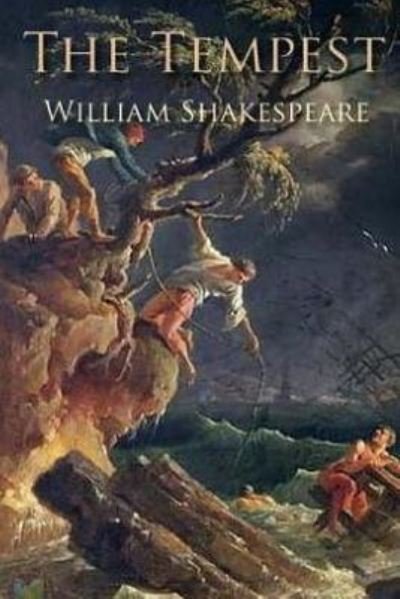
The Tempest William Shakespeare
Our customers say:


Also available as:
-
Paperback BookRevised edition(1988) HK$ 80
-
Paperback BookUpdated edition(1998) HK$ 80
- Paperback Book (2015) HK$ 94
-
Paperback BookRevised edition(2003) HK$ 97
- Paperback Book (1991) HK$ 99
-
Paperback Book1st edition(2014) HK$ 109
- Paperback Book (2015) HK$ 109
- Paperback Book (2014) HK$ 110
- Paperback Book (2018) HK$ 110
- Paperback Book (2018) HK$ 110
- Paperback Book (2017) HK$ 110
- Paperback Book (2016) HK$ 110
- Paperback Book (2016) HK$ 112
- Paperback Book (2017) HK$ 114
- Paperback Book (2016) HK$ 115
- Paperback Book (2017) HK$ 115
- Paperback Book (2015) HK$ 116
- Paperback Book (2012) HK$ 116
- Paperback Book (2016) HK$ 116
- Paperback Book (2016) HK$ 116
- Paperback Book (2011) HK$ 116
- Paperback Book (2013) HK$ 116
- Paperback Book (2018) HK$ 116
- Paperback Book (2022) HK$ 118
- Paperback Book (2017) HK$ 118
The Tempest
William Shakespeare
Publisher Marketing: The Tempest is a play by William Shakespeare, believed to have been written in 1610-11, and thought by many critics to be the last play that Shakespeare wrote alone. It is set on a remote island, where Prospero, the rightful Duke of Milan, plots to restore his daughter Miranda to her rightful place using illusion and skillful manipulation. He conjures up a storm, the eponymous tempest, to lure his usurping brother Antonio and the complicit King Alonso of Naples to the island. There, his machinations bring about the revelation of Antonio's lowly nature, the redemption of the King, and the marriage of Miranda to Alonso's son, Ferdinand. There is no obvious single source for the plot of The Tempest, but researchers have seen parallels in Erasmus's Naufragium, Peter Martyr's De orbe novo, and eyewitness reports by William Strachey and Sylvester Jordain of the real-life shipwreck of the Sea Venture on the islands of Bermuda, and the subsequent conflict between Sir Thomas Gates and Sir George Somers. In addition, one of Gonzalo's speeches is derived from Montaigne's essay Of the Canibales, and much of Prospero's renunciative speech is taken word for word from a speech by Medea in Ovid's poem Metamorphoses. The masque in Act 4 may have been a later addition, possibly in honour of the wedding of Princess Elizabeth and Frederick V in 1613. The play was first published in the First Folio of 1623. The story draws heavily on the tradition of the romance, and it was influenced by tragicomedy and the courtly masque and perhaps by the commedia dell'arte. It differs from Shakespeare's other plays in its observation of a stricter, more organised neoclassical style. Critics see The Tempest as explicitly concerned with its own nature as a play, frequently drawing links between Prospero's "art" and theatrical illusion, and early critics saw Prospero as a representation of Shakespeare, and his renunciation of magic as signalling Shakespeare's farewell to the stage. The play portrays Prospero as a rational, and not an occultist, magician by providing a contrast to him in Sycorax: her magic is frequently described as destructive and terrible, where Prospero's is said to be wondrous and beautiful. Beginning in about 1950, with the publication of Psychology of Colonization by Octave Mannoni, The Tempest was viewed more and more through the lens of postcolonial theory-exemplified in adaptations like Aime Cesaire's Une Tempete set in Haiti-and there is even a scholarly journal on post-colonial criticism named after Caliban. Because of the small role that women play in the story, The Tempest has not attracted much feminist analysis. Miranda is typically viewed as having completely internalised the patriarchal order of things, thinking of herself as subordinate to her father. The Tempest did not attract a significant amount of attention before the closing of the theatres in 1642, and only attained popularity after the Restoration, and then only in adapted versions. In the mid-19th century, theatre productions began to reinstate the original Shakespearean text, and in the 20th century, critics and scholars undertook a significant re-appraisal of the play's value, to the extent that it is now considered to be one of Shakespeare's greatest works. Review Citations: Wilson Senior High Core Col 01/01/2008 pg. 65 (EAN 9780791095775, Hardcover) Wilson Senior High Core Col 01/01/2011 pg. 608 (EAN 9780791095775, Hardcover) Library Journal 05/01/2006 pg. 134 (EAN 9780300108163, Paperback) Univ PR Books for Public Libry 01/01/2007 pg. 1 (EAN 9780300108163, Paperback) Choice 04/01/2001 pg. 1474 (EAN 9780521783750, Paperback) Hornbook Guide to Children 01/01/1993 (EAN 9780679938736, Hardcover) Hornbook Guide to Children 01/01/1993 (EAN 9780679838739, Hardcover) Outside 10/01/2013 pg. 64 (EAN 9780553213072, Mass Market Paperbound) Contributor Bio: Shakespeare, William Arguably the greatest English-language playwright, William Shakespeare was a seventeenth-century writer and dramatist, and is known as the "Bard of Avon." Under the patronage of Queen Elizabeth I, he penned more than 30 plays, 154 sonnets, and numerous narrative poems and short verses. Equally accomplished in histories, tragedies, comedy, and romance, Shakespeare's most famous works include Romeo and Juliet, Hamlet, Macbeth, King Lear, The Taming of the Shrew, and As You Like It. Like many of his contemporaries, including Christopher Marlowe, Shakespeare began his career on the stage, eventually rising to become part-owner of Lord Chamberlain's Men, a popular dramatic company of his day, and of the storied Globe Theatre in London. Extremely popular in his lifetime, Shakespeare's works continue to resonate more than three hundred years after his death. His plays are performed more often than any other playwright's, have been translated into every major language in the world, and are studied widely by scholars and students.
| Media | Books Paperback Book (Book with soft cover and glued back) |
| Released | February 22, 2014 |
| ISBN13 | 9781496047274 |
| Publishers | Createspace |
| Pages | 104 |
| Dimensions | 156 × 234 × 6 mm · 158 g |
More by William Shakespeare
Show all





![Cover for William Shakespeare · Macbeth - The Alexander Shakespeare (Paperback Book) [CSEC edition] (2026)](https://imusic.b-cdn.net/images/item/original/681/9780008816681.jpg?william-shakespeare-2026-macbeth-the-alexander-shakespeare-paperback-book&class=scaled&v=1769434478)
More from this series

![Cover for William Shakespeare · The Tempest (York Notes Advanced) English Literature Study Guide - for 2026, 2027 exams: York Notes Series - York Notes Advanced (Paperback Book) [Revised edition] (2003)](https://imusic.b-cdn.net/images/item/original/376/9780582784376.jpg?william-shakespeare-2003-the-tempest-york-notes-advanced-english-literature-study-guide-for-2026-2027-exams-york-notes-series-york-notes-advanced-paperback-book&class=scaled&v=1502129488)
![Cover for William Shakespeare · The Tempest - Applause First Folio Editions (Paperback Book) [Annotated edition] (2000)](https://imusic.b-cdn.net/images/item/original/955/9781557832955.jpg?william-shakespeare-2000-the-tempest-applause-first-folio-editions-paperback-book&class=scaled&v=1403702897)
![Cover for William Shakespeare · The Tempest - Cambridge School Shakespeare (Paperback Book) [3 Revised edition] (2014)](https://imusic.b-cdn.net/images/item/original/533/9781107615533.jpg?william-shakespeare-2014-the-tempest-cambridge-school-shakespeare-paperback-book&class=scaled&v=1394692013)
![Cover for William Shakespeare · The Tempest - Collins Classics (Paperback Book) [Epub edition] (2011)](https://imusic.b-cdn.net/images/item/original/354/9780007902354.jpg?william-shakespeare-2011-the-tempest-collins-classics-paperback-book&class=scaled&v=1408035737)
![Cover for William Shakespeare · The Tempest - Folger Shakespeare Library (Paperback Book) [Updated edition] (2015)](https://imusic.b-cdn.net/images/item/original/014/9781501130014.jpg?william-shakespeare-2015-the-tempest-folger-shakespeare-library-paperback-book&class=scaled&v=1626146654)

![Cover for William Shakespeare · The Tempest - The Arden Shakespeare Third Series (Paperback Book) [Revised edition] (2011)](https://imusic.b-cdn.net/images/item/original/477/9781408133477.jpg?william-shakespeare-2011-the-tempest-the-arden-shakespeare-third-series-paperback-book&class=scaled&v=1648100121)

![Cover for William Shakespeare · The Tempest - The New Cambridge Shakespeare (Hardcover Book) [2 Revised edition] (2013)](https://imusic.b-cdn.net/images/item/original/525/9781107021525.jpg?william-shakespeare-2013-the-tempest-the-new-cambridge-shakespeare-hardcover-book&class=scaled&v=1395752277)
![Cover for William Shakespeare · The Tempest - The New Cambridge Shakespeare (Paperback Book) [2 Revised edition] (2013)](https://imusic.b-cdn.net/images/item/original/579/9781107619579.jpg?william-shakespeare-2013-the-tempest-the-new-cambridge-shakespeare-paperback-book&class=scaled&v=1395752278)
![Cover for William Shakespeare · The Tempest - Wordsworth Classics (Paperback Book) [New edition] [Paperback] (1994)](https://imusic.b-cdn.net/images/item/original/036/9781853262036.jpg?william-shakespeare-1994-the-tempest-wordsworth-classics-paperback-book&class=scaled&v=1453678389)


![Cover for William Shakespeare · The Tempest in Plain and Simple English: (Paperback Book) [A Modern Translation And The Original edition] (2015)](https://imusic.b-cdn.net/images/item/original/391/9781511780391.jpg?william-shakespeare-2015-the-tempest-in-plain-and-simple-english-paperback-book&class=scaled&v=1484863972)

![Cover for William Shakespeare · The Tempest the Graphic Novel (American English, Original Text) (Paperback Book) [1 Reprint edition] (2009)](https://imusic.b-cdn.net/images/item/original/693/9781906332693.jpg?william-shakespeare-2009-the-tempest-the-graphic-novel-american-english-original-text-paperback-book&class=scaled&v=1409693177)
![Cover for William Shakespeare · The Tempest The Graphic Novel: Original Text (Paperback Book) [British English edition] (2009)](https://imusic.b-cdn.net/images/item/original/297/9781906332297.jpg?william-shakespeare-2009-the-tempest-the-graphic-novel-original-text-paperback-book&class=scaled&v=1393511478)
![Cover for William Shakespeare · The Tempest The Graphic Novel: Plain Text (Paperback Book) [British English edition] (2009)](https://imusic.b-cdn.net/images/item/original/303/9781906332303.jpg?william-shakespeare-2009-the-tempest-the-graphic-novel-plain-text-paperback-book&class=scaled&v=1393511477)
See all of William Shakespeare ( e.g. Paperback Book , Hardcover Book , Book , CD and Audiobook (CD) )