
Tell your friends about this item:
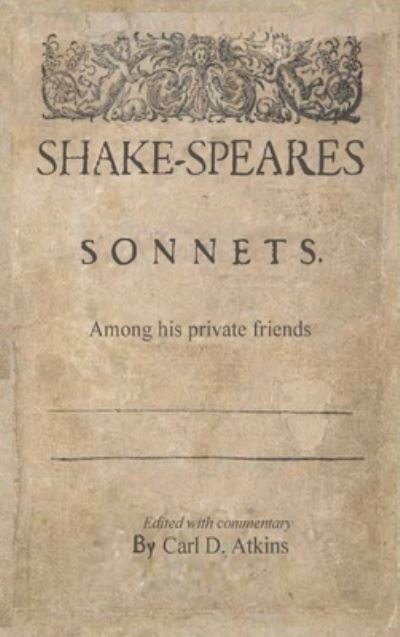
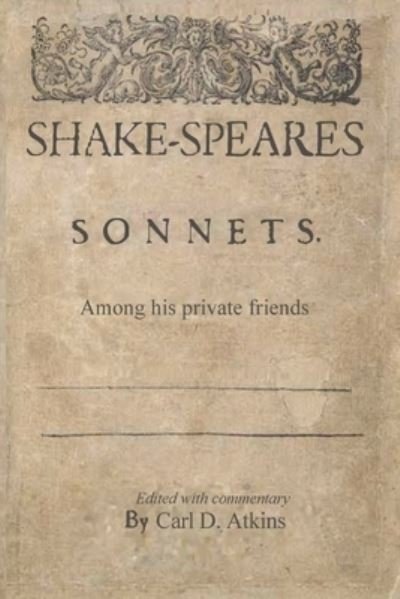
Shakespeare's Sonnets William Shakespeare
Our customers say:


Also available as:
- Paperback Book (2026) HK$ 96
- Paperback Book (2015) HK$ 99
- Paperback Book (2020) HK$ 100
- Paperback Book (2015) HK$ 109
- Paperback Book (2018) HK$ 110
- Paperback Book (2016) HK$ 110
- Paperback Book (2018) HK$ 110
- Paperback Book (2018) HK$ 113
- Paperback Book (2015) HK$ 137
- Paperback Book (2021) HK$ 137
- Paperback Book (2017) HK$ 143
- Paperback Book (2015) HK$ 170
- Paperback Book (2026) HK$ 188
- Book (2022) HK$ 207
-
Hardcover BookGift edition(2010) HK$ 225
- Paperback Book (2012) HK$ 241
- Book (2022) HK$ 300
- Hardcover Book (2012) HK$ 326
Shakespeare's Sonnets
William Shakespeare
Publisher Marketing: Shakespeare's sonnets are a collection of 154 sonnets, dealing with themes such as the passage of time, love, beauty and mortality, first published in a 1609 quarto entitled SHAKE-SPEARES SONNETS: Never before imprinted. (although sonnets 138 and 144 had previously been published in the 1599 miscellany The Passionate Pilgrim). The quarto ends with "A Lover's Complaint," a narrative poem of 47 seven-line stanzas written in rhyme royal. The first 17 poems, traditionally called the procreation sonnets, are addressed to a young man urging him to marry and have children in order to immortalize his beauty by passing it to the next generation. Other sonnets express the speaker's love for a young man; brood upon loneliness, death, and the transience of life; seem to criticise the young man for preferring a rival poet; express ambiguous feelings for the speaker's mistress; and pun on the poet's name. The final two sonnets are allegorical treatments of Greek epigrams referring to the "little love-god" Cupid. The publisher, Thomas Thorpe, entered the book in the Stationers' Register on 20 May 1609: Tho. Thorpe. Entred for his copie under the handes of master Wilson and master Lownes Wardenes a booke called Shakespeares sonnettes vjd. Whether Thorpe used an authorised manuscript from Shakespeare or an unauthorised copy is unknown. George Eld printed the quarto, and the run was divided between the booksellers William Aspley and John Wright. The sonnets are almost all constructed from three four-line stanzas (called quatrains) and a final couplet composed in iambic pentameter. This is also the meter used extensively in Shakespeare's plays. The rhyme scheme is abab cdcd efef gg. Sonnets using this scheme are known as Shakespearean sonnets. Often, the beginning of the third quatrain marks the volta ("turn"), or the line in which the mood of the poem shifts, and the poet expresses a revelation or epiphany. There are a few exceptions: Sonnets 99, 126, and 145. Number 99 has fifteen lines. Number 126 consists of six couplets, and two blank lines marked with italic brackets; 145 is in iambic tetrameters, not pentameters. There is one other variation on the standard structure, found for example in sonnet 29. The normal rhyme scheme is changed by repeating the b of quatrain one in quatrain three, where the f should be. Review Citations: Library Journal 04/01/1996 (EAN 9781565111370, Analog Audio Cassette) Contributor Bio: Shakespeare, William Arguably the greatest English-language playwright, William Shakespeare was a seventeenth-century writer and dramatist, and is known as the "Bard of Avon." Under the patronage of Queen Elizabeth I, he penned more than 30 plays, 154 sonnets, and numerous narrative poems and short verses. Equally accomplished in histories, tragedies, comedy, and romance, Shakespeare's most famous works include Romeo and Juliet, Hamlet, Macbeth, King Lear, The Taming of the Shrew, and As You Like It. Like many of his contemporaries, including Christopher Marlowe, Shakespeare began his career on the stage, eventually rising to become part-owner of Lord Chamberlain's Men, a popular dramatic company of his day, and of the storied Globe Theatre in London. Extremely popular in his lifetime, Shakespeare's works continue to resonate more than three hundred years after his death. His plays are performed more often than any other playwright's, have been translated into every major language in the world, and are studied widely by scholars and students.
| Media | Books Paperback Book (Book with soft cover and glued back) |
| Released | January 5, 2014 |
| ISBN13 | 9781494917883 |
| Publishers | Createspace |
| Genre | Cultural Region > British Isles |
| Pages | 92 |
| Dimensions | 129 × 198 × 5 mm · 99 g |
More by William Shakespeare
Show all





More from this series
![Cover for William Shakespeare · Shakespeare's Sonnets & Poems - Folger Shakespeare Library (Paperback Book) [Enriched Classic edition] (2006)](https://imusic.b-cdn.net/images/item/original/282/9780743273282.jpg?william-shakespeare-2006-shakespeare-s-sonnets-poems-folger-shakespeare-library-paperback-book&class=scaled&v=1409615405)





![Cover for William Shakespeare · Shakespeare's Sonnets: Bilingual Edition: English-french (Paperback Book) [English And French edition] (2013)](https://imusic.b-cdn.net/images/item/original/881/9780984679881.jpg?william-shakespeare-2013-shakespeare-s-sonnets-bilingual-edition-english-french-paperback-book&class=scaled&v=1409217478)
![Cover for William Shakespeare · Shakespeare's Sonnets: The Complete Illustrated Edition (Hardcover Book) [Complete Illustrated edition] (2016)](https://imusic.b-cdn.net/images/item/original/153/9781604336153.jpg?william-shakespeare-2016-shakespeare-s-sonnets-the-complete-illustrated-edition-hardcover-book&class=scaled&v=1648171935)
![Cover for William Shakespeare · Shakespeare's Sonnets: The Problems Solved (Paperback Book) [2nd ed. 1973 edition] (1973)](https://imusic.b-cdn.net/images/item/original/344/9780333147344.jpg?william-shakespeare-1973-shakespeare-s-sonnets-the-problems-solved-paperback-book&class=scaled&v=1604017201)
See all of William Shakespeare ( e.g. Paperback Book , Hardcover Book , Book , CD and Audiobook (CD) )